Kel
Building Consultants
CASE STUDy
Building Investigation Case Studies
Real-world examples of independent building investigations, defect inspections and technical advice across Melbourne and Victoria, demonstrating how site observations, testing and evidence are assessed to develop clear and practical conclusions.
Service
Leak Detection & Building Investigation
Property Type
Multi-residential
Investigation Methods
Moisture Measurement · Thermal Imaging · Tracer Testing
Outcome
Evidence of an active leak from the suspected source was not reproduced under the conditions tested.
CASE STUDY 01
Independent Leak Investigation & Verification
Testing a suspected shower leak using a structured, evidence-based investigation.
The Brief
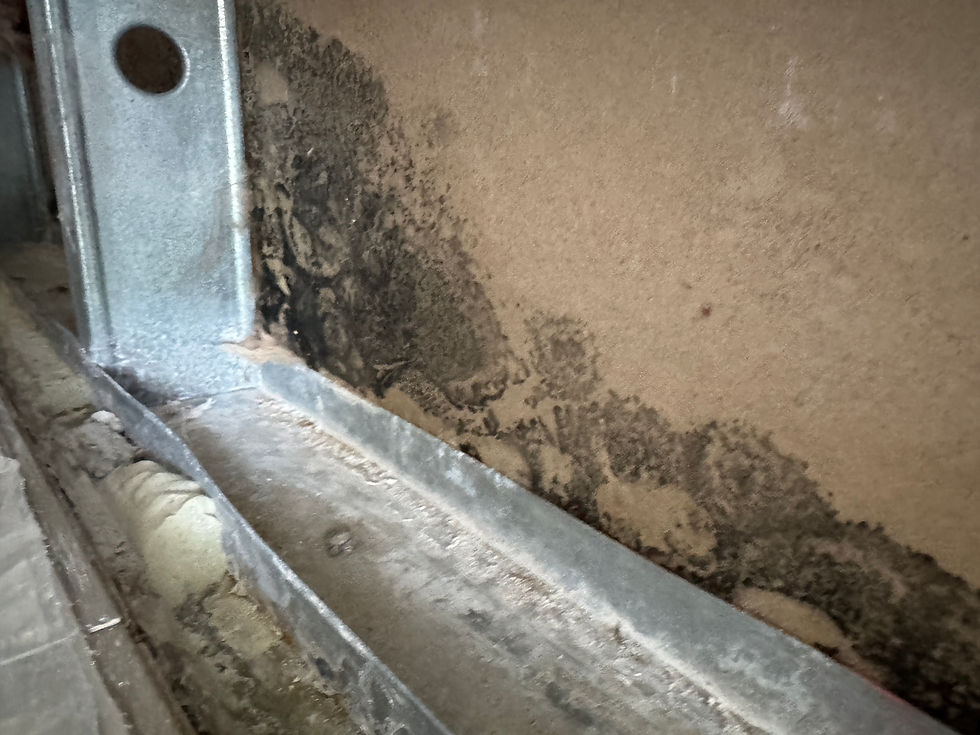
Kel Building Consultants was engaged to independently investigate a suspected leak associated with an apartment bathroom.
Previous investigations had attributed moisture-related damage to a potential failure within the shower waterproofing system.
The purpose of the independent investigation was to determine whether an active leak consistent with the proposed source could be reproduced under controlled testing.
The Investigation
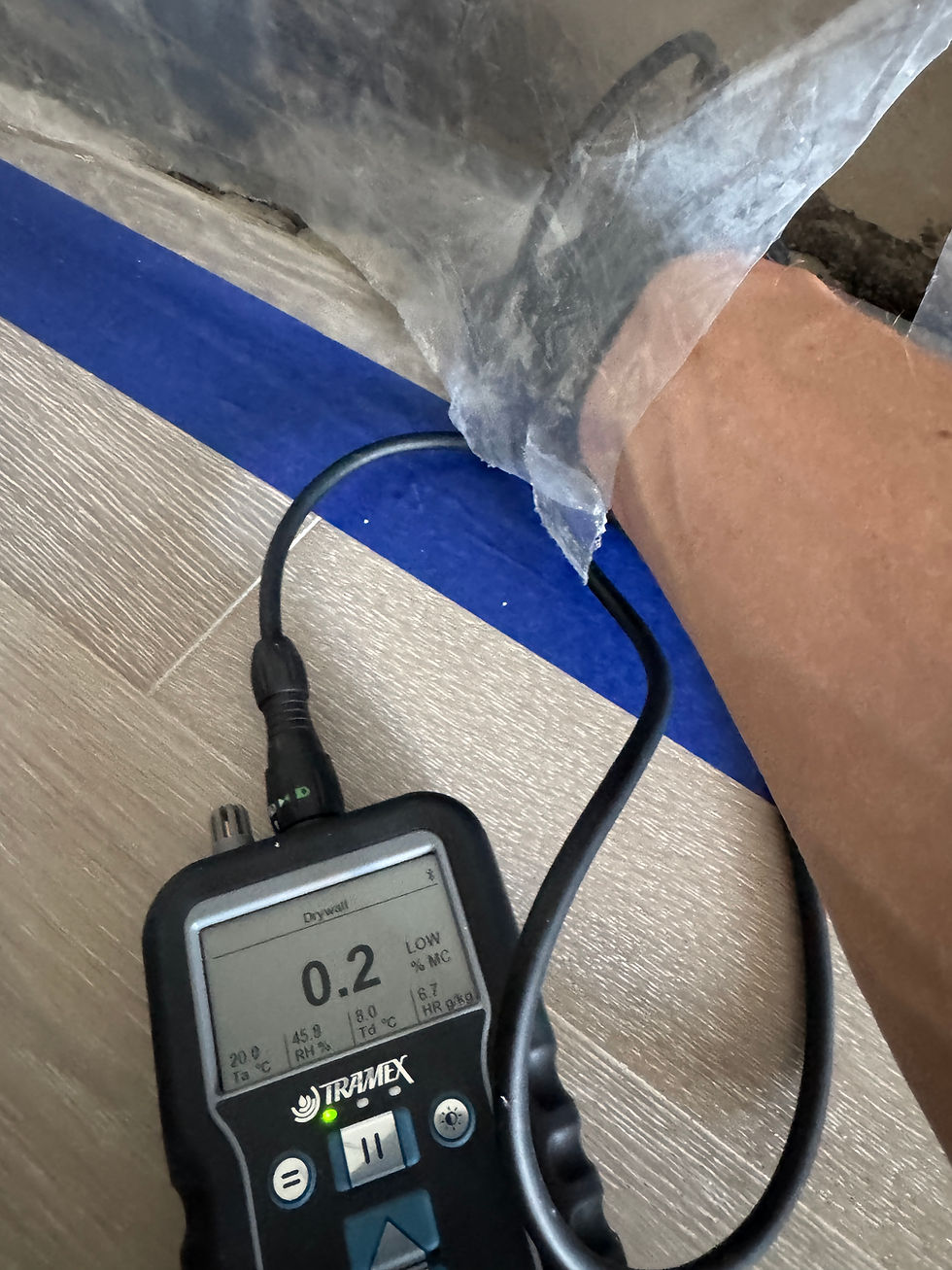
The investigation began by establishing baseline conditions and inspecting the shower recess, adjoining construction and accessible cavity areas. Testing was undertaken progressively, beginning with conditions intended to replicate normal shower use before escalating to more intensive flood and spray testing. Multiple investigative methods were used to assess the conditions and test the proposed leak mechanism.
01 — Visual inspection
02 — Moisture measurement
03 — Thermal imaging
04 — Fluorescein tracer dye testing
05 — Staged shower and flood testing
06 — Time-stamped documentation
Key Evidence
Moisture Readings
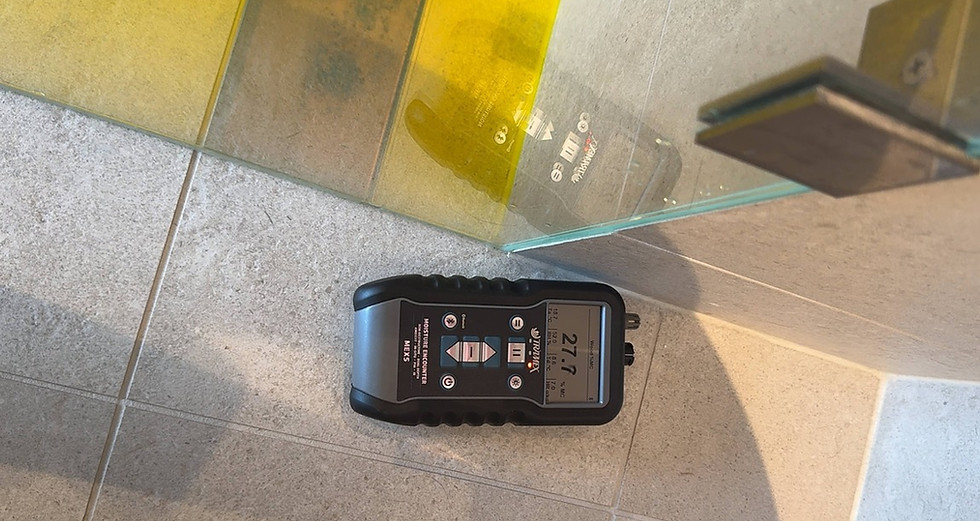
An initially elevated non-destructive moisture reading was compared with readings obtained at different depths and against the known construction at the test location. The differing results indicated that a conductive element behind the surface could be influencing the meter rather than demonstrating elevated moisture.
The Finding
The testing undertaken did not reproduce evidence of an active leak from the suspected source.
Despite extending the duration, area and detection methods used to investigate the proposed leak mechanism, the suspected pathway was not reproduced during the inspection.
The combined moisture, thermal and tracer evidence did not support attributing the observed conditions to an active leak from the shower recess under the conditions tested.
Further investigation of alternative potential causes was therefore recommended.
Thermal Imaging
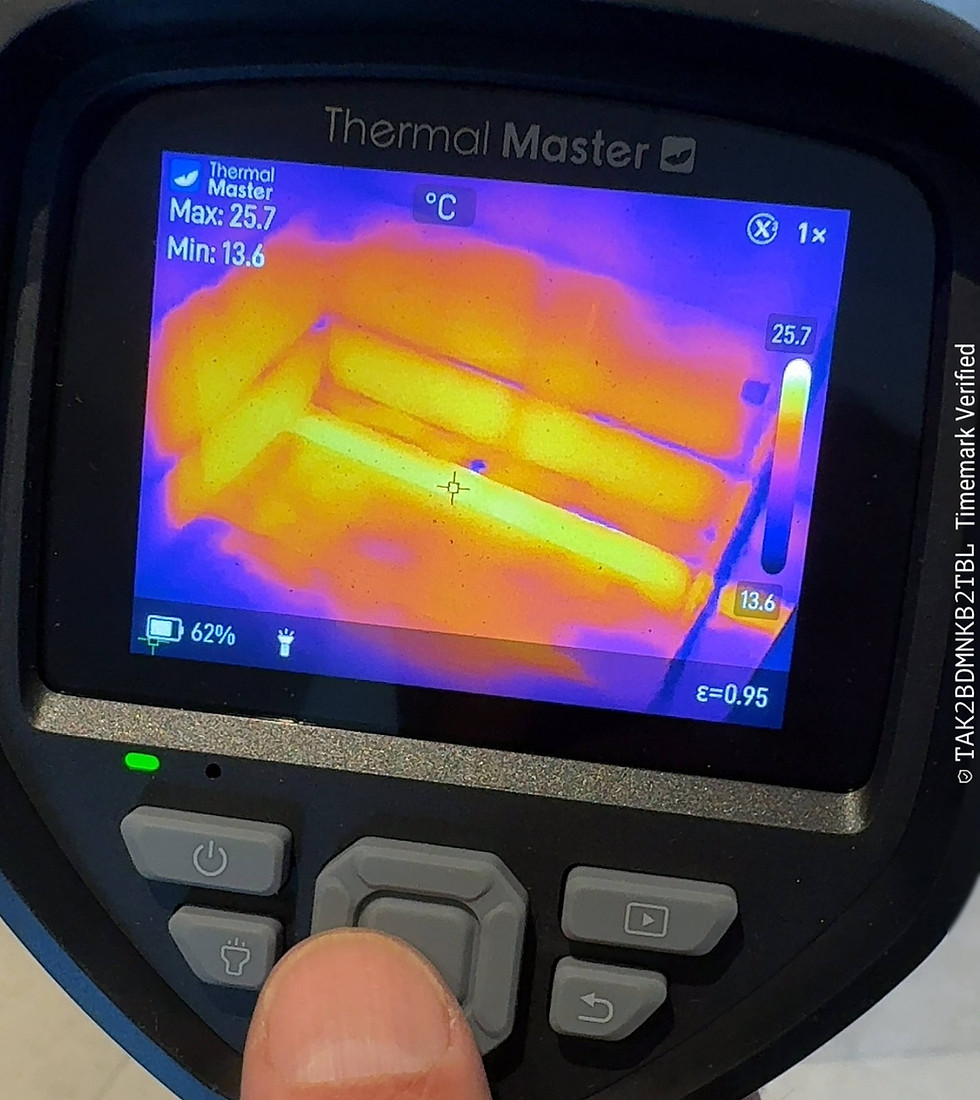
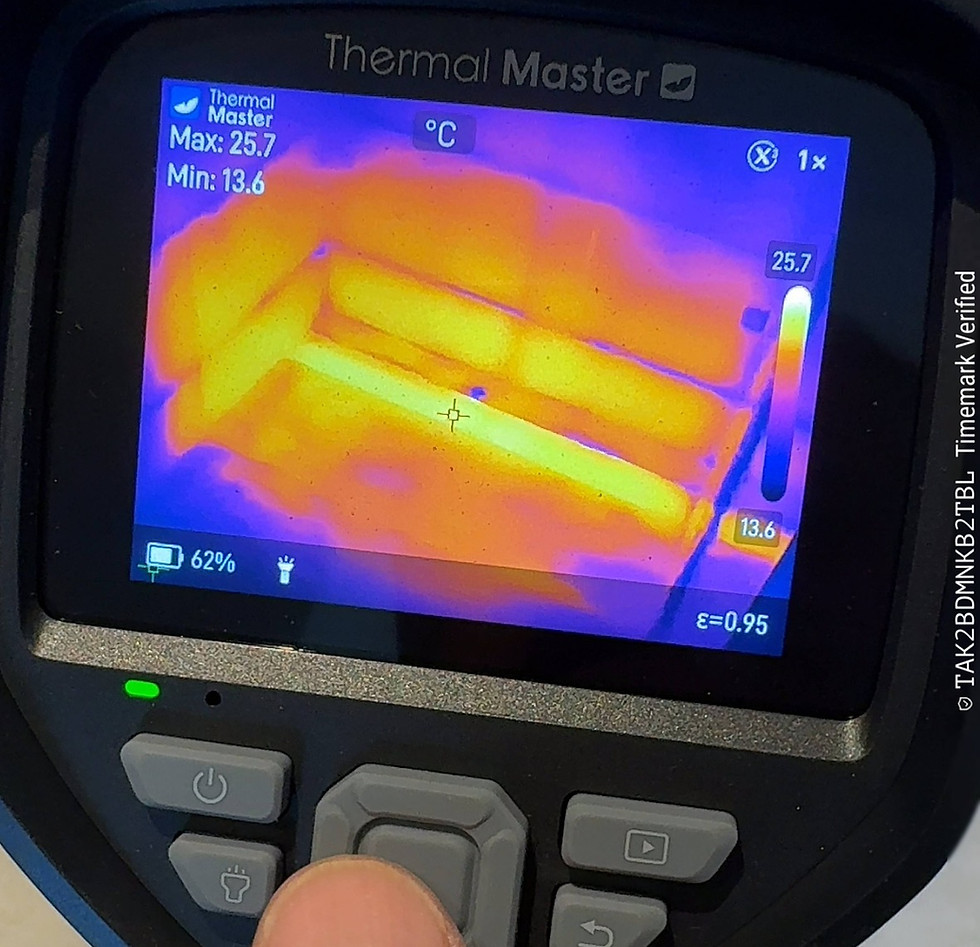
Thermal imaging identified a localised temperature difference adjacent to the shower-screen junction following testing. The shape, location and construction of the junction were considered when interpreting the anomaly, including thermal conduction as an alternative explanation to moisture migration.
Tracer Testing
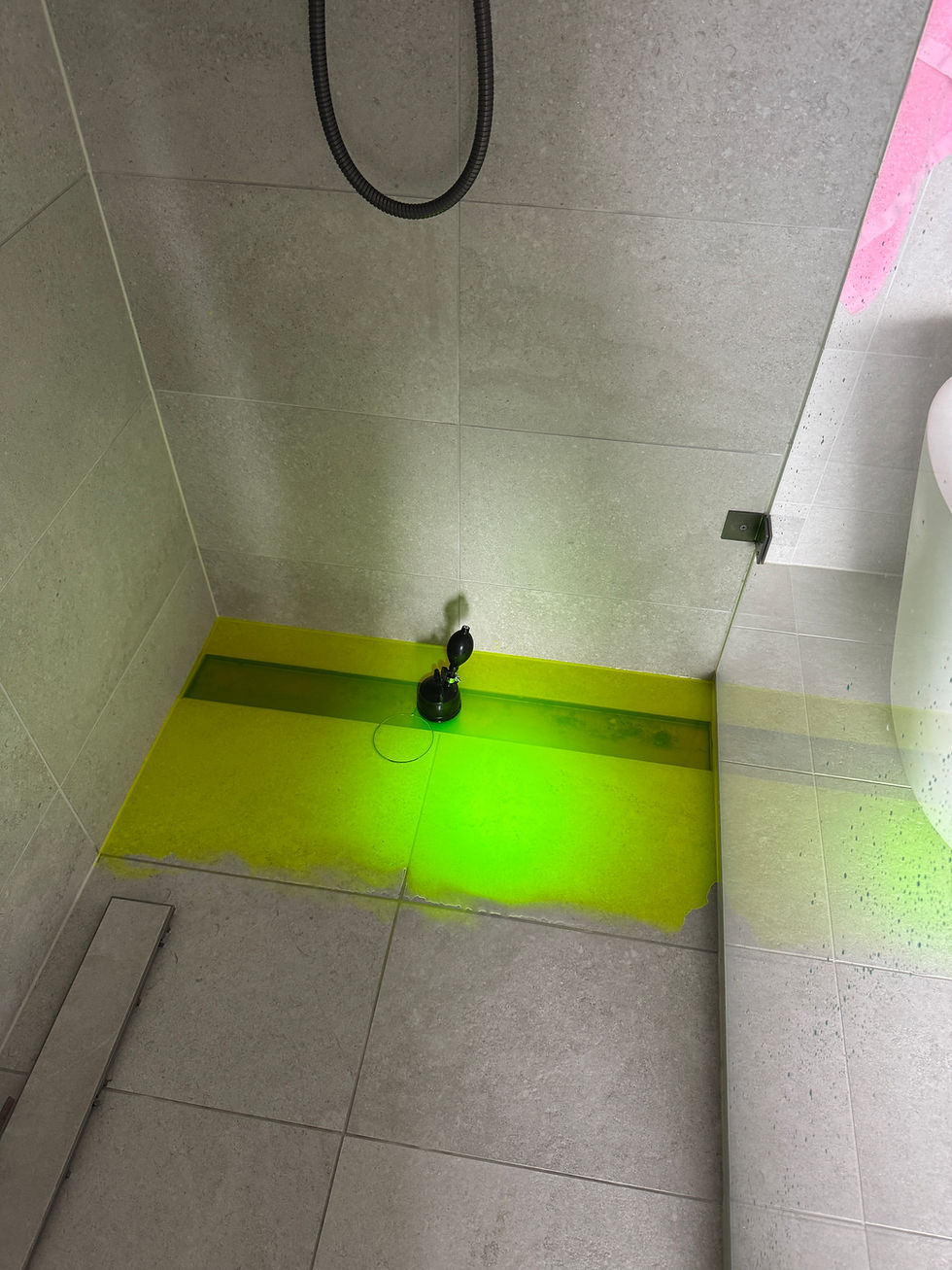
Fluorescein tracer was introduced during progressively extended flood testing while the accessible cavity associated with the suspected leak path was monitored under UV light. No tracer response was detected at the monitored location during the test period.
What This Investigation Demonstrates
Independent investigation is not about confirming an existing assumption. It requires testing the proposed mechanism, considering alternative explanations and assessing the available evidence collectively.
01
A reading is a data point, not a diagnosis.
02
Thermal imaging identifies temperature differences; interpretation requires construction context.
03
Where moisture or damage appears may not identify where water entered.
04
Conclusions should reflect the collective evidence and the limitations of the investigation.
In this investigation, no single moisture reading, thermal image or visual observation was treated as determinative. The conclusion was developed from the relationship between the building construction, physical testing, comparative measurements and observed conditions.
Investigation Limitations
The assessment reflected conditions observed during the inspection and testing undertaken. The absence of a reproduced leak does not exclude an intermittent, historical or otherwise unreplicated event. Testing was non-destructive and did not constitute certification of the waterproofing membrane.
NEED AN INDEPENDENT OPINION?
Discuss Your Project
Talk to Kel Building Consultants about your building inspection, defect investigation or technical advisory requirements.